


The Shetland Amenity Trust gathered genetic data on Shetland’s native willow to develop conservation actions required for relict trees. The aim of this project was to generate genetic diversity information about the different willow species currently present across Shetland, to provide a better understanding of individual species diversity and the population health at different sites. […]
Learn More
We awarded a grant to Plantlife who convened a multi-stakeholder civic mediation project: Finding the Common Ground on Sustainable Upland Deer Management. Upland deer management in Scotland has been undergoing significant transformations due to policy changes and environmental, economic, and social shifts. Effective management of these changes required cross-sector collaboration at various levels. Although there […]
Learn More
The grant supported Plantlife, in partnership with the Alliance for Scotland’s Rainforest, to commission and produce a website and impactful short film to secure support for Scotland’s rainforest Scotland’s rainforest is one of our most precious habitats but few people knew it existed and fewer still know how globally significant it is. The film was […]
Learn More
Ecochar offers a novel biochar-based carbon removal solution with outstanding biodiversity co-benefits: the removal of widespread and highly invasive rhododendron which threatens Scotland’s rare coastal temperate rainforest. Treeconomy proposed a circular economy solution: converting the woody biomass from invasive rhododendron removal into biochar. This biochar would then be sold as carbon removal credits to corporate […]
Learn More
The project set out to map all Scottish woodland and tree toponyms across the Gàidhealtachd, which, co-ordinated with other evidence, helps to map the historical presence of woodland. Some of these areas are still wooded but, of particular interest, are the current areas of open ground, with no records of previous land-use beyond linguistic clues […]
Learn More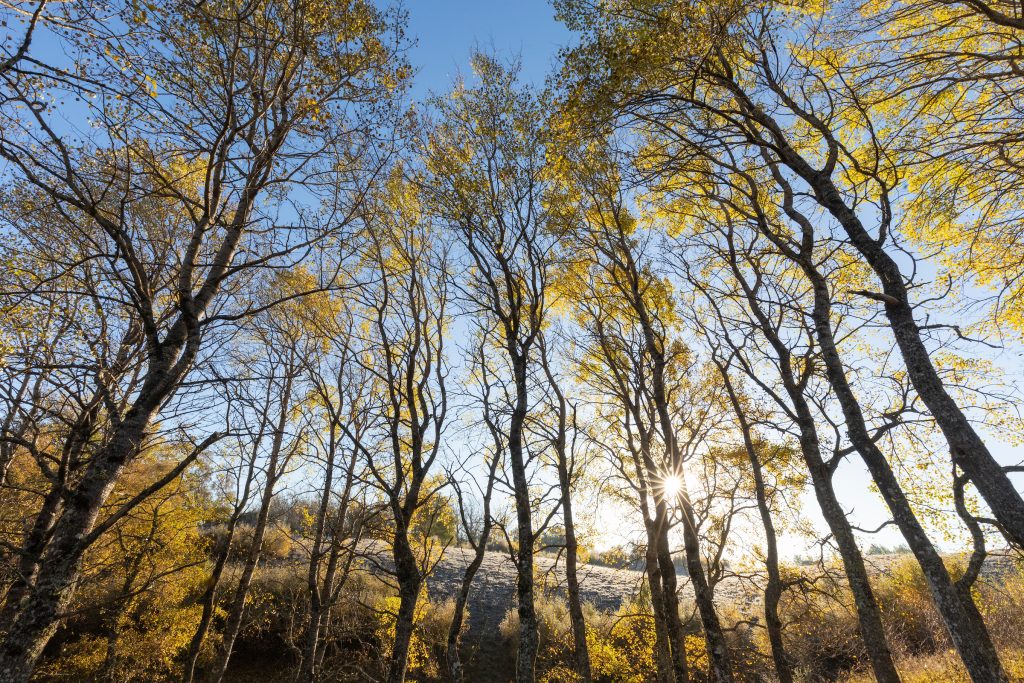
This grant went towards phase 2 of the Painting Scotland Yellow project: to produce a promotional film about aspen to inform professionals, policy-makers and the general public, followed by an event to encourage collaborative effort in propagating aspen.
Learn More
This scoping study by the Royal Botanic Garden Edinburgh was conducted to explore the development of a project to find and propagate mature elm ‘survivors’ from areas severely impacted by Dutch elm disease. Dutch elm disease (DED) is caused by two related fungi which are spread by bark beetles and it has devastated all elm […]
Learn More
The aim of the Native Woodland Discussion Group and Forest Policy Group’s Natural Climate Solutions awareness programme, was to clarify and collate the current state of knowledge and key messages around native woodlands, carbon sequestration and storage. Outcomes The Native Woodlands and Carbon: an Emerging Picture report highlights gaps in our knowledge and some of […]
Learn More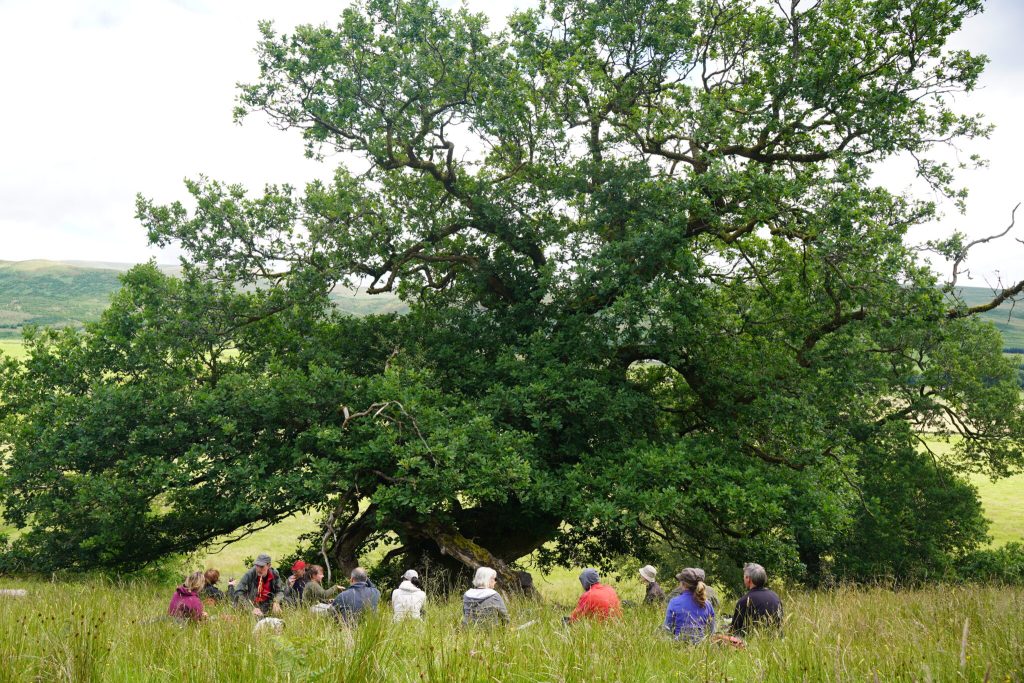
Borders Forest Trust undertook an integrated study to allow for the sensitive ecological restoration and expansion of a rare surviving habitat and provide a resource for more widespread recognition and restoration of ancient wood pasture, slope alder wood pasture in particular.
Learn More
The University of York, along with the James Hutton Institute and Forest Research, aimed to develop the first microsatellite markers to enable a population genetic study of the Shining Guest Ant, a British Action Plan woodland specialist species. Outcomes This aim was achieved, with the development and analysis of eight microsatellite markers which showed sufficient […]
Learn More
The Caledonian Pinewoods in the Highlands of Scotland are unique in the UK; home to some of the UK’s rarest wildlife, they are also economically important for commercial timber enterprises. However, in recent years, Dothistroma Needle Blight (DNB) has become increasingly widespread, affecting at least eighty-two species of pine worldwide, including the UK’s native Scots […]
Learn More