


Dr. François-Xavier Joly is project leader of this University of Stirling project which is quantifying how native woodland regeneration (NWR) affects the quantity of carbon stored in plant biomass, above and belowground and in the soil. “While NWR likely increases carbon sequestration in the vegetation through tree growth, it may not necessarily lead to a […]
Learn More
University of St Andrews Professor Rob Wilson‘s research proposal asks “With climate scenarios suggesting that the Scottish climate will become both warmer and wetter, how might this affect the current stock of oak woodlands and their distribution?” This project by the University of St. Andrews will combine data from the physical and chemical analysis of […]
Learn More
A grant was awarded to Sarah H. Watts at University of Stirling to support her PhD project researching montane scrub restoration in Scotland. The six-year study, led by PhD researcher Sarah Watts of the University’s Faculty of Natural Sciences, looked at the impact of deer management on mountain woodland. Mountain woodland provides a range of […]
Learn More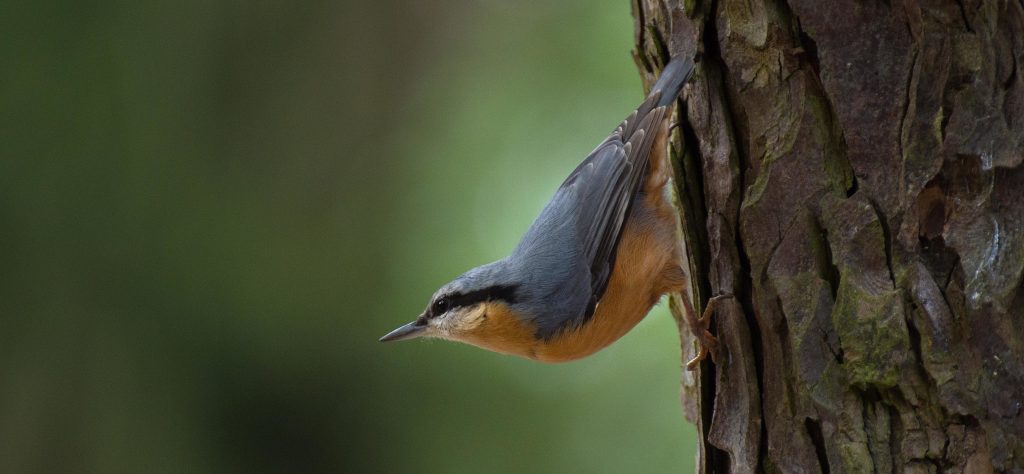
The University of West of England and the Woodland Creation & Ecological Network (WrEN) were keen to test the hypothesis that relative levels of avian species richness within woodlands can be measured by extracting and identifying DNA filtered from the air. This project sought to test whether an emerging method of extracting DNA from the […]
Learn More
The objectives for this partnership between Rick Worrell and Falkland Stewardship Trust, was to collect scion material from wild apple trees in western Scotland, produce grafted plants, and establish 2 small seed stands from these. The trees were previously verified to be wild apple by DNA analysis at Royal Botanic Gardens Edinburgh (RBGE). Outcomes Scion […]
Learn More
The Kilsture Forest Community Group were keen to develop their role as co-custodians of the forest through a Citizen Science project, film screenings, surveys (including mycorrhizal networks), storytelling and an artists residency. In 2018 the forest was being sold by Forestry and Land Scotland (FLS) so the community rallied to reverse the planned disposal. KFCG opted […]
Learn More